If you have ever searched “is soy harmful?”, you probably discovered that the internet has very strong opinions about a rather ordinary bean. Depending on what you read, soy is either an excellent source of plant protein or something capable of disrupting your hormones, damaging your thyroid and causing all kinds of health problems. Unsurprisingly, the reality is much less dramatic.
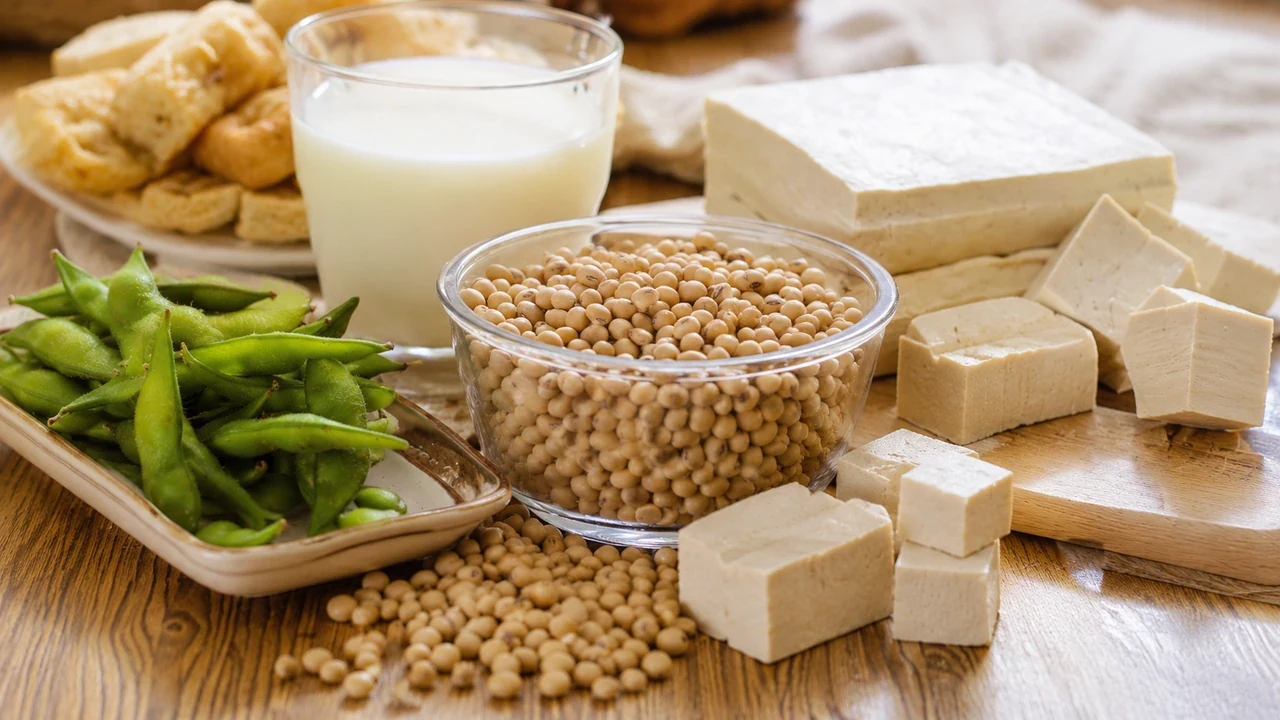
Soy has been part of traditional diets in several parts of Asia for centuries, and today you can find it in tofu, tempeh, edamame, soya drinks, yoghurt alternatives, textured vegetable protein and many meat substitutes. For vegetarians in particular, it can be a convenient and versatile source of protein. Current nutritional evidence does not support the idea that normal consumption of soy foods is harmful for most people. The British Dietetic Association describes soya as a nutritious food providing protein, unsaturated fats, fibre and several vitamins and minerals.
That does not mean every product containing soy is automatically healthy, or that everyone should eat unlimited quantities of it. As with most nutrition questions, context matters. So, rather than treating soy as either a superfood or a nutritional villain, let’s look at what the evidence actually tells us.
Is Soy Harmful, or Is Its Reputation Worse Than the Reality?
One reason soy has acquired such a controversial reputation is that it contains compounds known as isoflavones. These belong to a larger family of plant substances called phytoestrogens because their molecular structure has some similarities to the hormone oestrogen. From there, an apparently logical but misleading conclusion became popular: if soy contains something resembling oestrogen, eating soy must increase oestrogen activity in your body.
Human biology is considerably more complicated than that. Soy isoflavones are not human oestrogen, and they do not simply behave like an additional dose of the hormone. Their biological activity is much weaker and can vary depending on the tissue and receptors involved. This distinction matters because many alarming claims about soy and hormones start by treating phytoestrogens and human oestrogen as though they were interchangeable. They are not. The British Dietetic Association specifically notes that the oestrogenic activity of soy isoflavones differs from and is considerably weaker than the oestrogen produced by the human body.
So if you regularly eat tofu, pour fortified soya drink over your breakfast or add edamame to a salad, there is no evidence-based reason to assume that you are somehow flooding your body with oestrogen.
Soy and Hormones: Does Soy Affect Testosterone in Men?
The idea that soy makes men more feminine is probably one of the most persistent soy health myths. It has generated countless social media posts and rather more jokes than good nutritional advice. Fortunately, this is also one of the questions that researchers have investigated directly.
A 2021 meta-analysis examining clinical studies of soy and isoflavone consumption in men found no significant effect on total testosterone, free testosterone, oestradiol or several other reproductive hormones. Importantly, the analysis included a range of soy and isoflavone intakes rather than simply examining people who occasionally ate tofu. The researchers concluded that neither soy foods nor isoflavone exposure affected male reproductive hormone concentrations.
For you as a consumer, the practical message is straightforward: eating normal portions of soy foods does not appear to reduce testosterone or feminise men. Extremely unusual dietary practices are a different question, as they would be with almost any food. Building most of your entire diet around one ingredient is rarely sensible nutrition. But a tofu curry, tempeh sandwich or soya yoghurt does not need to become a hormonal calculation.
What About Soy Phytoestrogens and Breast Cancer?
The relationship between soy phytoestrogens and breast cancer deserves particular care because the word “oestrogen” understandably raises concerns about hormone-sensitive cancers. Earlier laboratory and animal experiments contributed to fears that isoflavones might stimulate breast cancer cells. However, animal experiments involving isolated compounds and doses do not necessarily predict what happens when humans eat soy foods.
Current guidance from the American Cancer Society states that soy foods are considered safe, including for breast cancer survivors. Research in humans has not shown that eating soy foods increases breast cancer risk. Some observational research has even associated soy consumption with favourable outcomes, although that does not mean soy should be treated as a cancer treatment or guarantee protection against the disease.
There is also an important difference between eating tofu or edamame and taking concentrated isoflavone supplements. Supplements can provide much larger and less food-like doses of particular compounds. If you have had a hormone-sensitive cancer or are currently receiving treatment, discussing concentrated supplements with your doctor or oncology dietitian is much more sensible than removing ordinary soy foods from your diet because of something you read online.
Soy and Thyroid Health: Should You Be Concerned?
Another common claim is that soy damages the thyroid. This one has a little more nuance behind it, but it is still frequently exaggerated. Some compounds in soy can interact with processes involved in thyroid hormone production under particular conditions. Iodine status is relevant, which is one reason adequate iodine intake matters in a vegetarian diet regardless of whether you eat soy.
A systematic review and meta-analysis examining soy supplementation and thyroid function found no significant changes in the thyroid hormones T3 and T4. Researchers observed a very small rise in thyroid-stimulating hormone, or TSH, but stated that the clinical significance of the change was uncertain. Earlier research similarly found little evidence of harmful effects in people with normal thyroid function and adequate iodine intake.
There is, however, an important practical consideration if you take levothyroxine for hypothyroidism. Soy foods, like some other foods and supplements, can interfere with the absorption of thyroid medication if consumed too close to the dose. This does not normally mean you have to stop eating soy. It means medication timing and consistency matter, so follow the instructions given by your doctor or pharmacist rather than randomly eliminating foods from your diet.
Soy Protein: Why It Can Be Particularly Useful for Vegetarians
Once you move beyond the hormone debate, soy becomes nutritionally much less mysterious. Soybeans are legumes and provide substantial amounts of plant protein, along with unsaturated fats, fibre and micronutrients. Soy protein also contains all the essential amino acids required in the human diet, making foods such as tofu, tempeh and edamame particularly useful protein options for vegetarians.
That does not mean you need soy at every meal. A well-planned vegetarian diet can obtain protein from lentils, chickpeas, beans, peas, eggs, dairy products, nuts, seeds and other foods. Variety remains useful because different foods bring different nutrients to the table. But soy can make your life easier, especially if you want meals with a relatively concentrated source of protein without relying constantly on eggs or cheese.
There is another practical advantage. Replacing foods high in saturated fat with foods providing predominantly unsaturated fat fits well within established cardiovascular nutrition advice. Soybeans contain unsaturated fats, and organisations including the World Health Organization and American Heart Association recommend favouring unsaturated fats within an overall balanced diet.
Tofu, Tempeh, Edamame or Soya Burgers: Does the Type Matter?
Yes, because “contains soy” and “nutritionally equivalent” are not the same thing. Edamame, tofu and tempeh are relatively simple soy foods. A heavily processed vegetarian burger containing soy protein may also provide plenty of protein, but it can come with considerably more salt, saturated fat or other ingredients depending on the recipe. Soy sauce is another obvious example: it comes from soybeans, but nutritionally its most important characteristic is often its sodium content rather than its protein.
This is where common sense is more useful than food ideology. You do not need to fear processing automatically, and convenient vegetarian products can absolutely have a place in your diet. But read the label when a soy-based product becomes a regular rather than occasional food. Compare protein, saturated fat, salt and added sugars between similar products instead of deciding that something is healthy simply because “plant-based” appears on the packaging.
The World Health Organization recommends limiting sodium intake and specifically identifies salty condiments, including soy sauce, as potential contributors. In other words, tofu and soy sauce may come from the same bean but they play very different nutritional roles on your plate.
Choosing Soya Milk: One Detail Vegetarians Should Not Ignore
Soya drink can be one of the most nutritionally useful dairy alternatives, particularly because its protein content is usually closer to dairy milk than many nut or cereal-based drinks. But there is one shopping habit worth developing: check whether it is fortified.
Many mainstream soya drinks are fortified with calcium and vitamins, and some also contain vitamin B12, vitamin D, riboflavin or iodine. The precise formulation varies considerably between brands and countries. The British Dietetic Association notes that many soya drinks are fortified with nutrients normally associated with dairy milk, while organic versions may not be fortified.
So do not choose exclusively on flavour, packaging or whether the carton says “natural”. Turn it around and read the nutrition panel. If soya drink is replacing dairy milk regularly rather than occasionally, calcium fortification is particularly useful. For vegetarians who consume little dairy, vitamin B12 and iodine also deserve attention across the diet. A product does not become nutritionally superior simply because its ingredient list is shorter; sometimes fortification is precisely what makes a substitute more useful.
Is Fermented Soy Better Than Regular Soy?
Tempeh, miso and some traditional soy sauces are fermented, which has led to another popular claim: fermented soy is supposedly healthy while unfermented soy is harmful. The evidence does not justify such a clean division.
Fermentation changes the food. It can alter flavour, texture, digestibility and the availability of some compounds, which is one reason tempeh is an excellent food in its own right. But there is no good reason to conclude from this that tofu, edamame or fortified soya drink should therefore be avoided. Major nutrition organisations assessing soy do not make “fermented only” a requirement for safe soy consumption. The British Dietetic Association, for example, includes tofu, soya drinks and other soy foods within its discussion of healthy soy consumption.
A more useful strategy is to eat different forms of soy if you enjoy them. Use tofu in stir-fries, tempeh when you want a firmer texture, edamame in salads or bowls, and fortified soya drink where you would otherwise use milk. Variety is far easier to defend nutritionally than creating arbitrary rules around a single ingredient.
Can You Eat Too Much Soy?
You can eat too much of almost anything if it starts pushing other useful foods out of your diet. That is different from saying soy itself is toxic or dangerous.
Suppose breakfast is soya yoghurt, lunch is a soy burger, your afternoon snack is a soy protein shake and dinner is tofu. That does not automatically make the day unhealthy, but it raises a reasonable question: why are you relying on the same food source so heavily? Lentils, chickpeas, kidney beans, eggs, yoghurt, nuts, seeds and whole grains provide nutrients and culinary variety that soy cannot replace simply by being high in protein.
Concentrated soy or isoflavone supplements deserve more caution than ordinary foods. The US National Center for Complementary and Integrative Health notes that soy foods are generally considered safe for people without soy allergy, while evidence concerning long-term use of concentrated supplements is less certain.
The sensible approach is not “eat as much soy as possible”. It is “soy can be one useful component of a varied vegetarian diet”.
Who Should Be More Careful With Soy?
The obvious exception to general advice is soy allergy. If you have a diagnosed soy allergy, avoidance is necessary regardless of the food’s nutritional benefits. People taking thyroid medication should also pay attention to medication timing, as discussed earlier, without assuming this automatically requires complete avoidance.
If you have a medical condition in which diet forms part of your treatment, individual advice should take priority over general nutrition articles. The same applies if you are considering concentrated isoflavone supplements during cancer treatment or for menopausal symptoms. Food and supplements are not interchangeable simply because they originated from the same plant. The American Cancer Society, for example, distinguishes ordinary soy foods from concentrated phytoestrogen supplements when discussing breast cancer survivors.
For everyone else, there is little justification for micromanaging every gram of tofu you eat. Focus on your overall dietary pattern: enough vegetables and fruit, varied protein sources, whole grains, healthy fats and the nutrients that deserve particular attention in vegetarian diets.
So, Is Soy Safe? A Practical Way to Include It in Your Diet
For most people, the answer to “is soy safe?” is yes when eaten as part of a normal, varied diet. Current evidence does not support common claims that ordinary soy consumption lowers testosterone in men, feminises the body or routinely damages thyroid function. Nor does human evidence justify avoiding soy foods simply because they contain phytoestrogens.
You also do not need to make soy a nutritional project. If you like tofu, eat tofu. Tempeh is expensive or difficult to find where you live? Then you do not need it. If fortified soya drink works well in your breakfast, it can be a useful choice. And if you prefer lentils, beans, eggs or dairy products most days, there is no requirement for vegetarians to eat soy at all.
The best advice is remarkably ordinary: use minimally processed soy foods regularly if you enjoy them, compare labels on more processed products, keep your protein sources varied and avoid turning concentrated supplements into substitutes for a balanced diet without a good reason.
Conclusion: Soy Does Not Need to Be a Superfood — or a Villain
The debate around whether soy is harmful says almost as much about modern nutrition culture as it does about soy itself. We tend to want foods to fall into simple categories: good or bad, natural or dangerous, superfood or poison. Real nutrition rarely works that way.
Soy is simply a nutrient-rich legume that happens to contain biologically interesting compounds. Foods such as tofu, tempeh, edamame and fortified soya drinks can provide valuable protein and other nutrients in an ovo-lacto-vegetarian diet. The most frightening claims about soy and hormones are not supported by the weight of human research, while genuine considerations — such as soy allergy, thyroid medication timing and excessive reliance on supplements — are far more specific and manageable.
Reliable External Sources
For this post, we have consulted information and research from organisations and scientific resources including the British Dietetic Association (BDA), World Health Organization (WHO), American Cancer Society, US National Center for Complementary and Integrative Health (NCCIH), European Food Safety Authority (EFSA). These sources help separate evidence-based nutrition advice from claims that can sound convincing online but do not necessarily reflect what human research actually shows.