Is a Vegetarian More Sustainable way of eating? In many everyday situations, choosing vegetarian meals can reduce the environmental pressures linked with food production. However, the answer is not as simple as labelling every plant-based ingredient as low impact and every animal-based food as high impact. Farming methods, transport, packaging, seasonality, food waste and the amount eaten all matter. A thoughtful vegetarian diet can be a practical part of sustainable eating. Especially when it includes a varied mix of pulses, grains, vegetables, fruit, nuts, seeds, eggs and dairy in sensible amounts.
Looking at food choices through an environmental lens is useful because everyone needs to eat, and meals are repeated every day. Vegetarianism does not need to be perfect to make a difference. It can simply mean building more meals around beans, lentils, vegetables and wholegrains, while choosing dairy and eggs with care. This guide explores the environmental impact vegetarianism may have, explains the main factors behind a food carbon footprint, and offers realistic ideas for making a vegetarian diet sustainability-focused without turning shopping and cooking into a complicated task.
Why Is a Vegetarian More Sustainable Choice for Many Meals?
Food production uses land, water, energy and labour. It can also contribute to greenhouse gas emissions at several stages, including farming, processing, refrigeration, transport and waste disposal. Plant foods often provide an efficient foundation for meals because crops can be eaten directly, rather than being grown partly to feed animals. This is one reason a sustainable vegetarian diet commonly centres on staple foods such as oats, potatoes, beans, lentils, chickpeas, rice, pasta and seasonal vegetables. These foods are versatile, filling and generally easy to use in low-waste home cooking.
That said, vegetarian diets are not identical. A plate based mainly on vegetables, pulses and grains may have a different footprint from one built around heavily packaged convenience foods, large quantities of cheese or ingredients transported by air. The aim is not to create strict rules or judge individual choices. Instead, it helps to understand where the larger trade-offs tend to be. A vegetarian pattern can support lower-impact eating when it relies mostly on minimally processed plant foods, makes good use of leftovers and treats more resource-intensive ingredients as occasional additions rather than the basis of every meal.
The food carbon footprint: what shapes it?
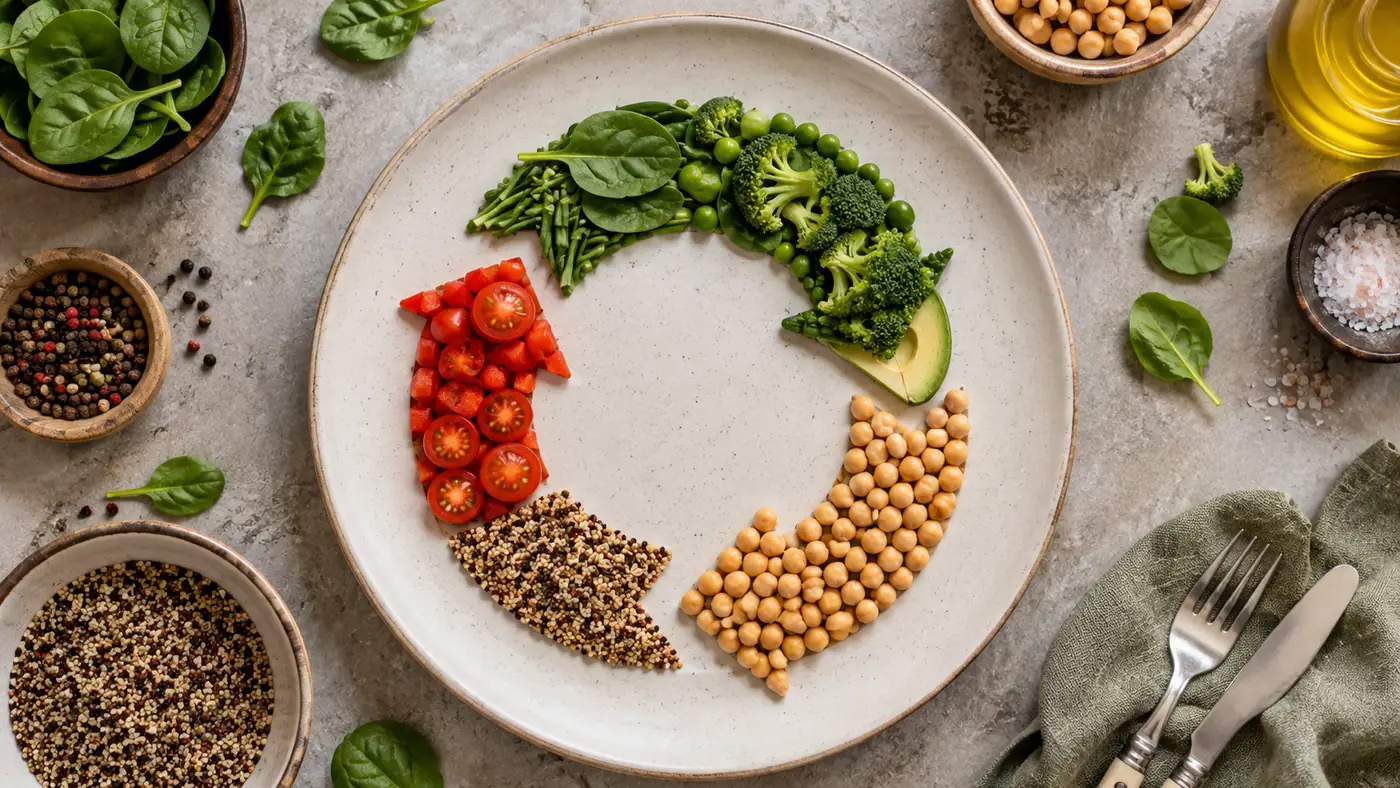
A food carbon footprint describes the greenhouse gas emissions associated with producing, moving, storing and disposing of food. Farming can be a major part of this picture, but it is not the only part. Heated greenhouses, energy-intensive processing, chilled storage, frequent small deliveries and household waste can all add to a product’s overall impact. For this reason, it is worth looking beyond a single label or ingredient. A simple lentil soup made in a large batch, portioned and frozen may be a more sustainable option than a single-serving meal that needs extensive packaging and refrigeration.
Transport matters, although it is not always the biggest factor. Foods moved by air can have a particularly high transport impact, while products brought by ship or road may have a different profile. Locally grown food can be a good choice when it is in season and does not require unusually energy-intensive growing conditions. Yet imported staples such as dried beans, rice, spices and tinned tomatoes can still fit comfortably into sustainable eating. Rather than trying to buy only local food, it is often more practical to choose seasonal produce when available, use cupboard staples wisely and avoid wasting what has already been bought.
Land and water use in food production
Land and water use food systems require varies greatly between crops, regions and farming methods. Some crops need irrigation in dry areas, while others grow largely with rainfall. Land may be used for arable farming, orchards, pasture or wildlife habitats, so responsible food choices cannot be reduced to one simple measure. In general, meals based on pulses, cereals, vegetables and fruit can use resources differently from meals that depend heavily on animal agriculture. For vegetarians, this creates an opportunity to make beans, lentils and peas regular sources of protein rather than relying entirely on cheese and other dairy foods.
Dairy and eggs can have a place in an ovo-lacto-vegetarian diet, but moderation and variety are useful principles. Cheese is concentrated and delicious, so a small amount can bring plenty of flavour to a meal without needing to be the main ingredient. Try using grated mature cheese as a finishing touch in a vegetable bake, risotto or bean chilli, rather than building every meal around a large portion. Eggs can also work well alongside vegetables and grains in frittatas, omelettes or grain bowls. This approach keeps meals satisfying while broadening the range of plant foods on the plate.
Not all vegetarian foods have the same environmental impact
Environmental impact vegetarianism is sometimes discussed as though all plant foods are automatically equal, but real food systems are more complex. Almonds, avocados, chocolate, coffee and some out-of-season produce can raise questions about water use, land management, labour conditions or transport. This does not mean these foods must be avoided completely. It means they are best enjoyed as part of a diverse diet rather than treated as everyday essentials. Rotating ingredients also makes meals more interesting and can reduce dependence on a small number of crops or supply chains.
Processing and packaging deserve attention too. Plant-based burgers, ready meals and meat alternatives can be convenient, and they may help people make vegetarian cooking easier. They are not inherently unsuitable for a vegetarian diet sustainability plan. Still, it is sensible to balance convenience foods with basic ingredients that need less packaging and can be cooked in flexible ways. Tinned beans, frozen vegetables, dried lentils and wholegrains are particularly useful because they keep well and can become many different meals. Convenience is important, but it does not have to mean relying on individually wrapped or heavily processed options every day.
How to build a sustainable vegetarian diet at home
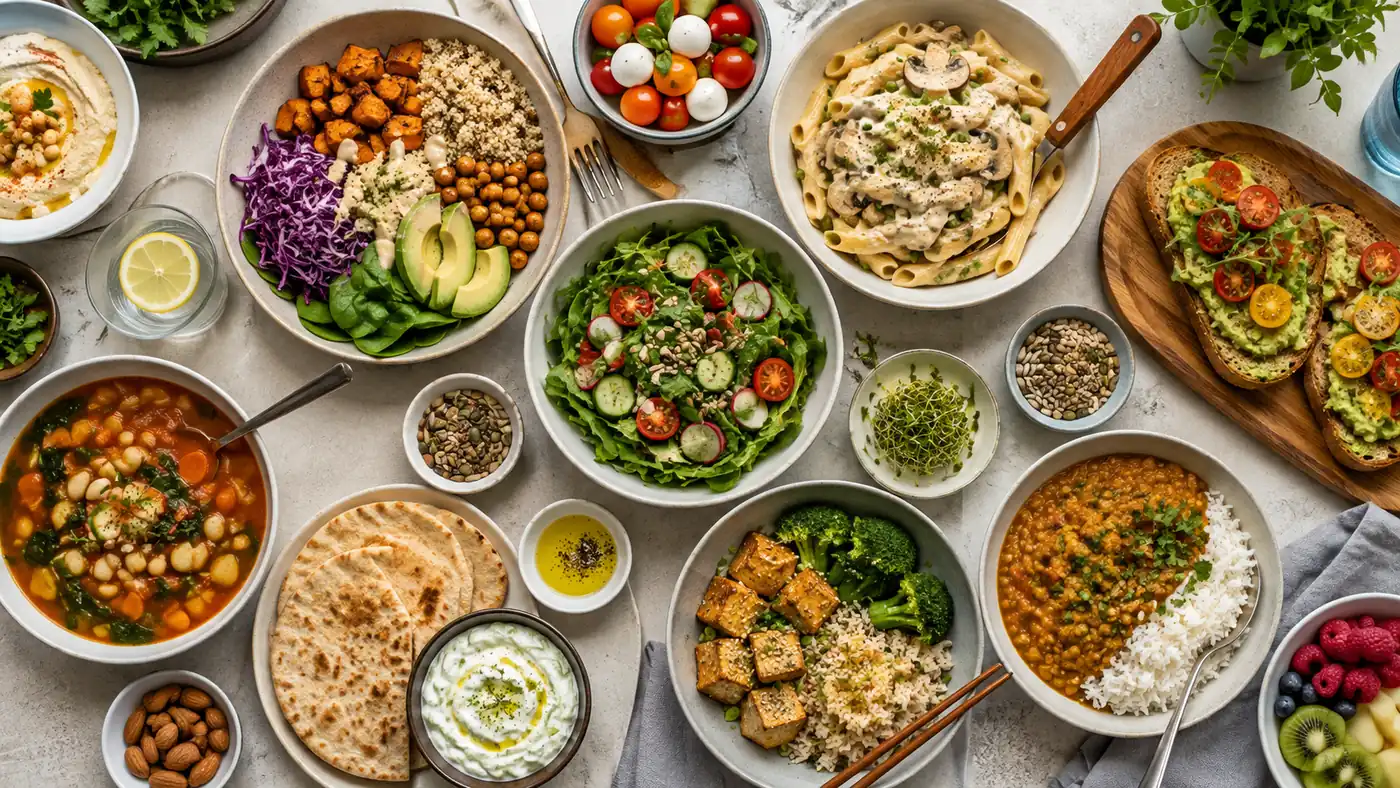
The most sustainable meals are often the ones that are planned well enough to be eaten. Start with a few reliable vegetarian dishes that use affordable staples and adapt to what is already in the kitchen. A vegetable and chickpea curry, lentil Bolognese, bean chilli, mushroom and pea risotto, or roasted vegetable traybake can all be adjusted according to the season. Cooking larger portions can save time and energy, especially when leftovers are used for lunch the next day or frozen in clearly labelled containers for a busy evening.
- Plan meals around ingredients that need using first, especially fresh vegetables, herbs and dairy products.
- Keep useful cupboard staples such as lentils, beans, oats, pasta, rice, tinned tomatoes and spices.
- Choose frozen vegetables and fruit when fresh produce is likely to go unused.
- Use leftovers creatively in soups, wraps, salads, pasta sauces and omelettes.
- Serve smaller portions first and keep extra food available for anyone who wants more.
- Compost suitable vegetable peelings and food scraps where local facilities allow.
Food waste is central to sustainable eating
Food waste increases the impact of any meal because the resources used to grow, process and transport that food have already been spent. Reducing waste is therefore one of the most useful actions available to vegetarians and non-vegetarians alike. Check the fridge before shopping, store food appropriately and understand the difference between a use-by date and a best-before date. A best-before date usually concerns quality, while a use-by date relates to food safety. If food is safe but slightly tired, it may still work well in soups, sauces, smoothies or baked dishes.
Vegetarian cooking is especially well suited to low-waste habits. Broccoli stalks can be sliced into stir-fries, beetroot leaves can be cooked like other greens, and vegetable trimmings can add flavour to homemade stock made without animal ingredients. Stale bread can become croutons, breadcrumbs or a savoury topping. Soft fruit can be stirred into porridge or blended into yoghurt. These small habits do not require expensive equipment or specialist knowledge, but together they make vegetarian meals more resourceful and help households get better value from the food they buy.
A balanced view of vegetarian diet sustainability
A vegetarian diet can be a meaningful route towards lower-impact food choices, particularly when it is based on a wide variety of plant foods and supported by careful shopping, storage and cooking. However, sustainability is broader than one dietary label. It includes how food is grown, how workers are treated, whether farmers can earn fairly, how wildlife and soils are protected, and how much food is wasted. Individual circumstances also matter: budget, access to shops, cooking facilities, culture and health needs all shape what is realistic for a household.
The most helpful approach is progress rather than perfection. Choose more pulse-based meals, enjoy seasonal produce where practical, use eggs and dairy thoughtfully, and make the most of ingredients already at home. These steps can make a vegetarian routine both enjoyable and more environmentally considered. Whether someone is vegetarian every day or simply wants to cook more meat-free meals, building habits around variety, seasonality and waste reduction is a positive, practical way to support sustainable eating.